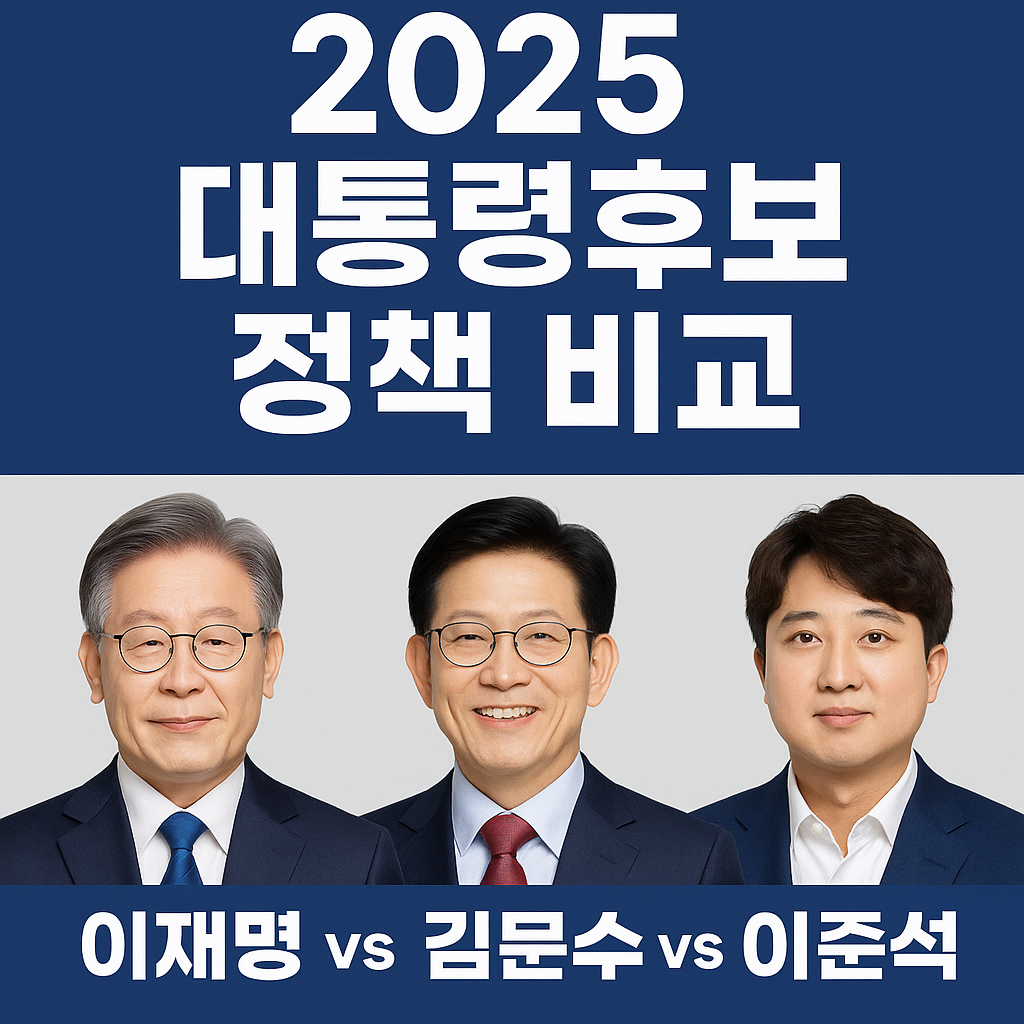

The 21st presidential election in South Korea has drawn massive public interest, with a historically high voter turnout. As the exit poll results are announced, people are closely watching which candidate is likely to win and how their policies will shape the future of Korea.
✅ Live Voting Turnout & Exit Poll Highlights
- Live Turnout: As of 7:00 PM on June 3, 2025, the national voter turnout has reached 77.8%, surpassing previous records.
- Exit Poll Results: Major broadcasting networks reported a close race among the top candidates at 8:00 PM. The final result is expected around midnight.
🔍 Predicted Policy Scenarios by Candidate
1. If Lee Jae-myung Wins
Economy
- Introduce universal basic income
- Expand public-sector job creation
- Regulate large corporations while supporting SMEs
Housing
- Supply large volumes of public housing
- Strengthen rent caps and tenant protection laws
Foreign Policy & Security
- Reopen peace dialogues with North Korea
- Emphasize multilateral diplomacy
Social Policy
- Reduce working hours
- Boost eco-friendly policies and welfare



2. If Kim Moon-soo Wins
Economy
- Promote free-market economy
- Deregulation and tax cuts
- Potential restructuring of public institutions
Housing
- Ease real estate regulations
- Lower capital gains tax, end multiple-homeowner penalties
Foreign Policy & Security
- Reinforce U.S.-Korea alliance
- Strong military stance toward North Korea
Social Policy
- Push for privatization and service competition
- Broaden citizen choice in healthcare and education




3. If Lee Jun-seok Wins
Economy
- Accelerate digital transformation
- Strong support for startups and young entrepreneurs
Housing
- Expand housing support for newlyweds and youth
- Balanced approach to tax reduction and deregulation
Foreign Policy & Security
- Pursue pragmatic middle-power diplomacy
- Invest in defense tech and self-reliant security
Social Policy
- Prioritize youth-focused reforms
- Push for pension and education reform




📊 Presidential Candidate Policy Comparison
Economic Policy
| Lee Jae-myung | Welfare-driven | Basic income, regional currency, public jobs |
| Kim Moon-soo | Market-driven | Deregulation, tax cuts, lean government |
| Lee Jun-seok | Innovation-driven | Startups, AI development, youth employment |
Housing Policy
| Lee Jae-myung | Public housing | 1M rental units, rent caps |
| Kim Moon-soo | Deregulation | Reduced taxes, loosened ownership rules |
| Lee Jun-seok | Practical | Youth-focused housing supply, loan support |
Welfare Policy
| Lee Jae-myung | Universal | Free medical care, education |
| Kim Moon-soo | Targeted | Support for vulnerable groups |
| Lee Jun-seok | Generational | Pension reform, childcare support |
Foreign & Security Policy
| Lee Jae-myung | Balanced diplomacy | Peace talks, multilateralism |
| Kim Moon-soo | Conservative | U.S. alliance, military buildup |
| Lee Jun-seok | Practical | Global engagement, defense tech focus |
Youth Policy
| Lee Jae-myung | Jobs & Income | Youth allowance, housing priority |
| Kim Moon-soo | Freedom & Growth | Startup incentives, student loans |
| Lee Jun-seok | Tech & Reform | Coding education, gig economy protection |
✍️ Final Thoughts: Who Will Shape Korea's Future?
Each candidate proposes a distinct roadmap for Korea:
- For stronger welfare and public support: Lee Jae-myung
- For market liberalization and economic expansion: Kim Moon-soo
- For innovation and future-focused reform: Lee Jun-seok
🧭 Conclusion: Korea at a Crossroads
The 2025 Korea Presidential Elections are more than a leadership change—they signify a national pivot. Exit polls indicate a tight race, and the elected leader will undoubtedly impact the nation's path for years to come.
This version is ideal for international readers, policy watchers, and journalists seeking an English summary of South Korea’s 2025 presidential race.