South Korea's presidential elections are among the most closely watched political events in Asia. As a major democratic power, Korea elects its president every five years, and each election has a significant impact not only on domestic policies but also on global diplomacy, economics, and regional security.
🇰🇷 The Importance of Korea’s Presidential Elections
South Korea is a key player in East Asia, with strong ties to the United States, China, and Japan. The country's leadership affects:
- North Korea relations
- Trade and global tech industries
- Military alliances and diplomacy
- Climate and green energy initiatives
Every election is a turning point, and the 2025 election is no exception.


🧑💼 Major Candidates and Political Divide
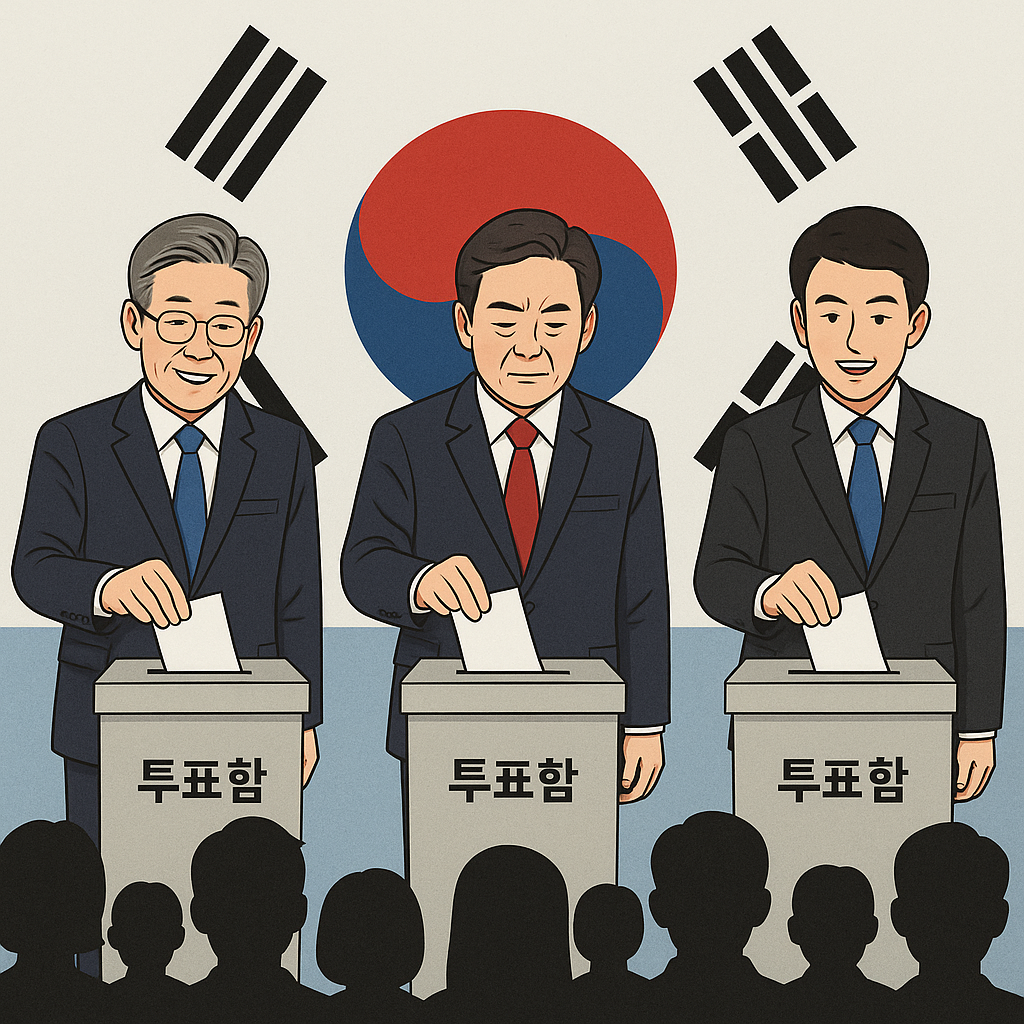
In 2025, the Korean presidential election features three major candidates from different ideological spectrums:
- Lee Jae-myung – Progressive policies, social welfare expansion, and diplomatic engagement with North Korea.
- Kim Moon-soo – Conservative stance, market-friendly reforms, and strong national defense policies.
- Lee Jun-seok – Centrist with a future-oriented approach, promoting innovation, digital transformation, and youth employment.
Each candidate represents a distinct vision for South Korea’s future.
🔍 Key Election Issues
The top concerns among Korean voters include:
- Economic inequality
- Housing affordability
- Youth unemployment
- Geopolitical tensions
- Environmental sustainability
Voters are also keenly focused on foreign relations, especially in the context of U.S.-China tensions and North Korea's military developments.
📊 The Role of Exit Polls and Voter Turnout
Korea’s elections are known for high voter participation, and exit polls play a crucial role in shaping public expectations. In 2025, the voter turnout exceeded 77%, reflecting strong democratic engagement.
🌏 Why the World Should Watch Korea's Elections
As a tech powerhouse and democratic leader in Asia, South Korea’s presidential choices resonate globally. The new president will:
- Shape digital economy strategies
- Influence peace talks with North Korea
- Partner with global powers on climate and defense


🧭 Conclusion
The Korea Presidential Elections are not just a national event—they are a global signal of democratic strength, innovation, and leadership in a rapidly changing world. Regardless of the outcome, the elected leader will guide Korea through the challenges and opportunities of the 21st century.
2025 Korea Presidential Elections: Exit Poll Analysis & Policy Forecast
The 21st presidential election in South Korea has drawn massive public interest, with a historically high voter turnout. As the exit poll results are announced, people are closely watching which candidate is likely to win and how their policies will shape
njoblover.com