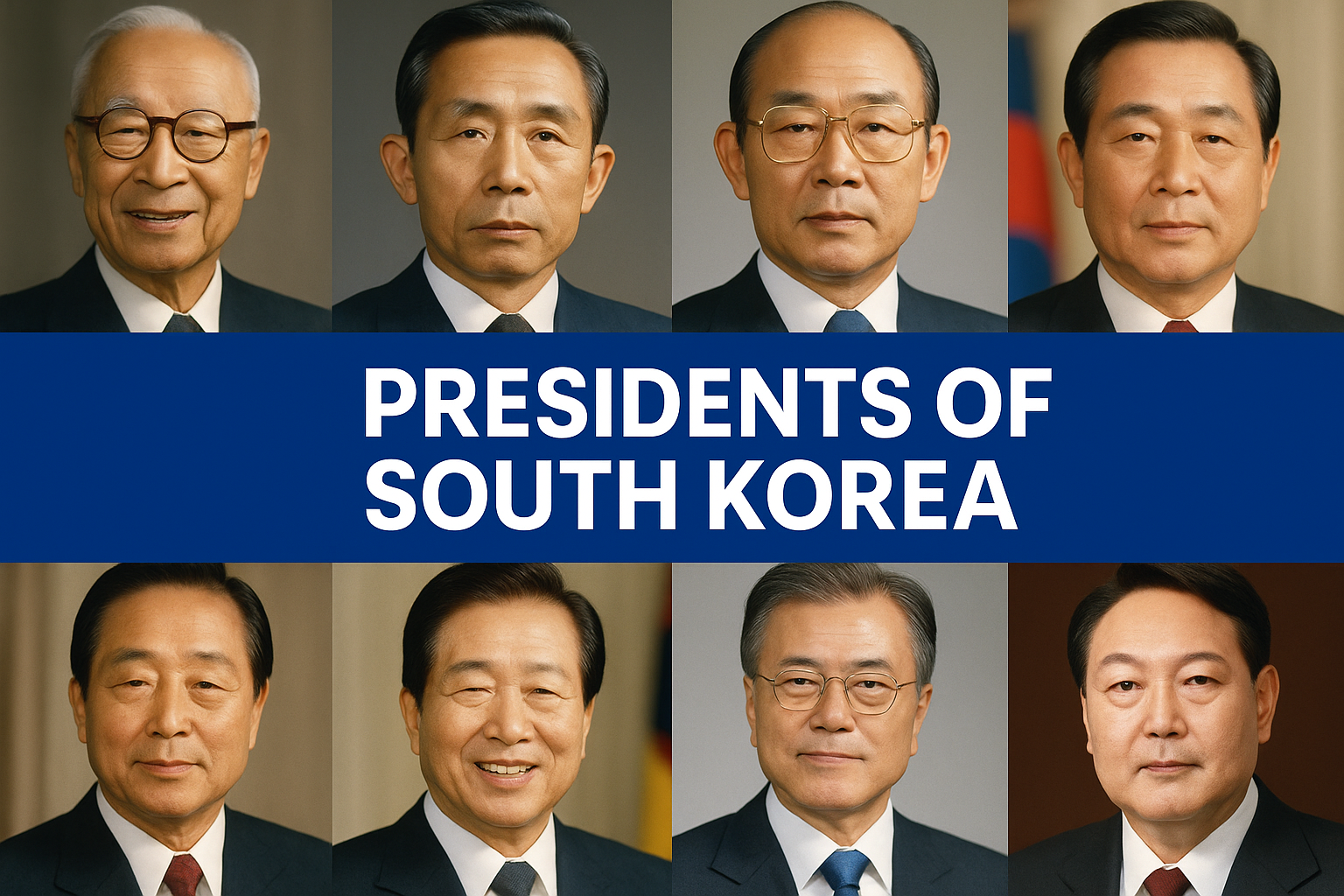
Since its establishment in 1948, the Republic of South Korea has had a dynamic and often tumultuous political history, with its presidents shaping the nation’s trajectory through economic growth, democratic reforms, and foreign policy. Below is a detailed account of each president, their terms, key policies, and any significant events such as impeachments or incomplete terms, tailored for English-speaking readers interested in South Korea’s political landscape.
1. Syngman Rhee (1948–1960)
- Term: July 24, 1948 – April 26, 1960
- Notable Policies:
- Anti-Communism: As South Korea’s first president, Rhee was a staunch anti-communist, aligning closely with the United States during the Cold War. His administration focused on rebuilding the nation post-Japanese occupation and during the Korean War (1950–1953).
- Economic Foundations: Rhee laid the groundwork for South Korea’s industrialization, though his policies were criticized for favoring cronies and fostering corruption.
- Authoritarian Rule: His government suppressed political dissent, restricted press freedom, and manipulated elections to maintain power.
- Reason for Incomplete Term: Rhee’s presidency ended due to widespread protests during the April Revolution of 1960, triggered by allegations of electoral fraud in the 1960 presidential election. Public outrage, particularly among students, led to mass demonstrations, forcing Rhee to resign.
- Outcome: Rhee stepped down on April 26, 1960, and went into exile in Hawaii, where he lived until his death in 1965. His resignation marked the end of the First Republic and ushered in a brief democratic experiment under the Second Republic.
2. Yun Bo-seon (1960–1962)
- Term: August 13, 1960 – May 16, 1962
- Notable Policies:
- Democratic Reforms: Yun presided over the Second Republic, which adopted a parliamentary system to curb executive power. His administration aimed to restore democratic institutions after Rhee’s authoritarian rule.
- Limited Authority: As president in a parliamentary system, Yun’s role was largely ceremonial, with real power vested in the prime minister.
- Reason for Incomplete Term: Yun was ousted by a military coup led by General Park Chung-hee on May 16, 1961, which dissolved the Second Republic and established military rule.
- Outcome: Yun resigned in 1962 and later became an opposition leader, advocating for democracy. The coup marked the beginning of the Third Republic under Park’s authoritarian regime.
3. Park Chung-hee (1963–1979)
- Term: December 17, 1963 – October 26, 1979
- Notable Policies:
- Economic Modernization: Park’s presidency is credited with the “Miracle on the Han River,” transforming South Korea from one of the world’s poorest nations into an industrial powerhouse. His policies promoted export-led growth, supported chaebols (family-owned conglomerates like Samsung and Hyundai), and invested heavily in infrastructure.
- Authoritarian Governance: Park’s Yushin Constitution (1972) centralized power, dissolved the National Assembly, and allowed indefinite presidential terms, effectively establishing a dictatorship.
- Security Focus: Park prioritized national security, strengthening ties with the U.S. and maintaining a hardline stance against North Korea.
- Reason for Incomplete Term: Park was assassinated on October 26, 1979, by Kim Jae-kyu, the head of the Korean Central Intelligence Agency (KCIA), during a dinner party. The assassination stemmed from internal power struggles and dissatisfaction with Park’s authoritarian rule.
- Outcome: Park’s death ended the Fourth Republic, leading to a power vacuum and political instability. His legacy remains polarizing: revered for economic achievements but criticized for human rights abuses.
4. Choi Kyu-hah (1979–1980)
- Term: December 6, 1979 – August 16, 1980
- Notable Policies:
- Transitional Leadership: Choi, a career bureaucrat, assumed the presidency after Park’s assassination. His administration aimed to stabilize the country and transition toward democracy.
- Economic Continuity: Choi continued Park’s economic policies but faced challenges due to political unrest and economic inflation.
- Reason for Incomplete Term: Choi was ousted by a military coup led by General Chun Doo-hwan on December 12, 1979, known as the “12.12 Incident.” Although he remained nominally in office until August 1980, his authority was severely undermined.
- Outcome: Choi resigned in August 1980, ceding power to Chun. His brief presidency is seen as a failed attempt to restore democratic governance.
5. Chun Doo-hwan (1980–1988)
- Term: September 1, 1980 – February 24, 1988
- Notable Policies:
- Military Rule: Chun consolidated power through martial law, suppressing dissent and controlling the media. His regime was marked by the Gwangju Uprising (1980), where a pro-democracy protest was brutally suppressed, resulting in hundreds of deaths.
- Economic Stabilization: Chun’s policies focused on stabilizing the economy, reducing inflation, and continuing export-driven growth.
- Foreign Relations: He strengthened U.S. ties and hosted the 1988 Seoul Olympics, boosting South Korea’s global image.
- Reason for Incomplete Term: Chun completed his term but faced significant public and political pressure for democratic reforms, leading to the 1987 June Democracy Movement.
- Outcome: Chun stepped down in 1988, adhering to the single seven-year term limit under the Fifth Republic. Post-presidency, he was sentenced to death in 1996 for his role in the Gwangju Massacre and corruption but was pardoned in 1997.

6. Roh Tae-woo (1988–1993)
- Term: February 25, 1988 – February 24, 1993
- Notable Policies:
- Democratic Transition: Roh oversaw South Korea’s transition to democracy under the Sixth Republic, with the 1987 Constitution establishing direct presidential elections and a five-year term.
- Nordpolitik: His foreign policy sought engagement with communist countries, including China and the Soviet Union, to isolate North Korea diplomatically.
- Economic Growth: Roh continued economic liberalization, preparing South Korea for globalization.
- Outcome: Roh completed his term, marking the first peaceful transfer of power in democratic South Korea. However, he was later convicted of corruption and involvement in the 1979 coup and Gwangju Massacre, receiving a 17-year sentence in 1996. He was pardoned in 1997.
7. Kim Young-sam (1993–1998)
- Term: February 25, 1993 – February 24, 1998
- Notable Policies:
- Anti-Corruption Reforms: Kim pursued aggressive anti-corruption campaigns, targeting political and military elites, including his predecessors Chun and Roh.
- Globalization (Segyehwa): His administration promoted South Korea’s integration into the global economy, joining the OECD in 1996.
- Financial Crisis: The 1997 Asian Financial Crisis severely impacted his presidency, requiring an IMF bailout and exposing weaknesses in the chaebol system.
- Outcome: Kim completed his term but left office with low approval ratings due to the economic crisis. His son was later implicated in corruption scandals.
8. Kim Dae-jung (1998–2003)
- Term: February 25, 1998 – February 24, 2003
- Notable Policies:
- Sunshine Policy: Kim’s signature policy promoted engagement with North Korea, culminating in the historic 2000 inter-Korean summit with Kim Jong-il. He won the Nobel Peace Prize in 2000 for these efforts.
- Economic Recovery: Kim navigated South Korea out of the 1997 financial crisis through structural reforms and IMF compliance.
- Human Rights and Democracy: As a former dissident, Kim strengthened democratic institutions and human rights protections.
- Outcome: Kim completed his term and is widely regarded as one of South Korea’s most successful presidents. However, his sons faced corruption allegations post-tenure.
9. Roh Moo-hyun (2003–2008)
- Term: February 25, 2003 – February 24, 2008
- Notable Policies:
- Progressive Reforms: Roh pursued policies to reduce regional disparities, reform the chaebol system, and enhance social welfare.
- Engagement with North Korea: He continued Kim Dae-jung’s Sunshine Policy, fostering inter-Korean cooperation.
- Political Neutrality Controversy: Roh’s creation of the Uri Party and public support for it sparked debates over presidential neutrality.
- Impeachment (2004):
- Reason: Roh was impeached by the National Assembly in March 2004 for violating political neutrality by encouraging supporters to join the Uri Party and for alleged incompetence and economic mismanagement.
- Outcome: The Constitutional Court overturned the impeachment in May 2004, ruling that the violations were not severe enough to warrant removal. Roh completed his term but faced corruption allegations involving his family post-tenure. In 2009, under investigation, he died by suicide, leaving a complex legacy.
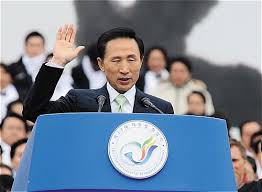
10. Lee Myung-bak (2008–2013)
- Term: February 25, 2008 – February 24, 2013
- Notable Policies:
- Resource Diplomacy: Lee focused on securing natural resources abroad to bolster South Korea’s economy.
- Economic Deregulation: His administration promoted business-friendly policies, but critics argued they favored chaebols over small businesses.
- Green Growth: Lee advocated for environmentally sustainable economic policies.
- Outcome: Lee completed his term but was later convicted of bribery and embezzlement in 2018, receiving a 15-year sentence. He was pardoned in 2022.
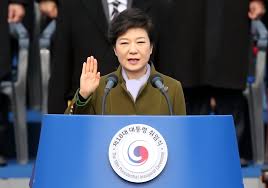
11. Park Geun-hye (2013–2017)
- Term: February 25, 2013 – March 10, 2017
- Notable Policies:
- Creative Economy: Park aimed to foster innovation and entrepreneurship to diversify the economy.
- Foreign Policy: She strengthened U.S. ties, deploying the THAAD missile defense system despite China’s opposition, and maintained a firm stance on North Korea.
- Cultural Promotion: Park promoted K-culture globally, boosting the Korean Wave (Hallyu).
- Impeachment (2017):
- Reason: Park was impeached in December 2016 after revelations that her confidante, Choi Soon-sil, influenced state affairs and extorted funds from chaebols (e.g., Samsung, Hyundai) for personal gain. Park was accused of abuse of power, coercion, and leaking state secrets.
- Outcome: The Constitutional Court unanimously upheld the impeachment on March 10, 2017, removing her from office. Park was sentenced to 24 years in prison in 2018 (later reduced) and pardoned in 2021. Her impeachment was the first successful removal of a sitting president in South Korea’s democratic era.

12. Moon Jae-in (2017–2022)
- Term: Elected following Park's impeachment.
- Policies: Pursued engagement with North Korea and implemented social welfare policies.

13. Yoon Suk-yeol (2022–2025)
- Term: Former prosecutor general turned president.
- Policies: Faced controversies over his administration's policies and handling of political opposition.
- Impeachment: Impeached in December 2024 after declaring martial law and attempting to suppress the National Assembly; removed from office in April 2025 by the Constitutional Court.
Korea Presidential Elections: What You Need to Know About South Korea’s Future
South Korea's presidential elections are among the most closely watched political events in Asia. As a major democratic power, Korea elects its president every five years, and each election has a significant impact not only on domestic policies but also on
njoblover.com